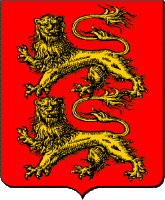
Toutes ces exactions concernent non le Duché de Normandie (notre propos) mais le Royaume nouvellement conquis d'Angleterre. La terre des normands du XIe siècle pacifiée (voir la Trêve de Dieu), les Vikings oubliés, est apparue aux yeux de l'Occident comme un exemple de stabilité et de progrès (notamment dans le domaine du droit). Je persiste à penser que le symbole le plus fort de la Normandie - et donc du Stade Malherbe qui revendique son rang de club phare de la région- aurait dûLandry a écrit :ronnie bird a écrit :Normand raffiné et pacificateur du Duché de Guillaume
However, in terms of how William the Bastard was thought of in other periods of English history, his name, and that of the Normans, was synonymous with vicious repression and high taxation. All the periods of civil unrest seem to have used the rather romantic notion of Anglo-Saxon freedom as some kind of golden age. This happened during the Peasants Revolt (1381) and during and after the English Revolution (Civil War, if you really must). The Chartists also looked back at pre-Norman freedoms.
William himself put down revolts with great savagery, to the point of ethnic cleansing. He also used the Church to fully suppress all aspects of life, both temporal and spiritual. Only one English born bishop survived three years after the conquest, (Wulfstan of Worcester), the others were replaced with Norman stooges. The introduction of a feudal system that reduced the vast majority of the population to virtual slaves might have something to do with his lack of popularity, and the forced labour to build the castles that reinforced their repression seemed to have added to this.
être l'étendard aux deux léopards et non la tête de barbare.